
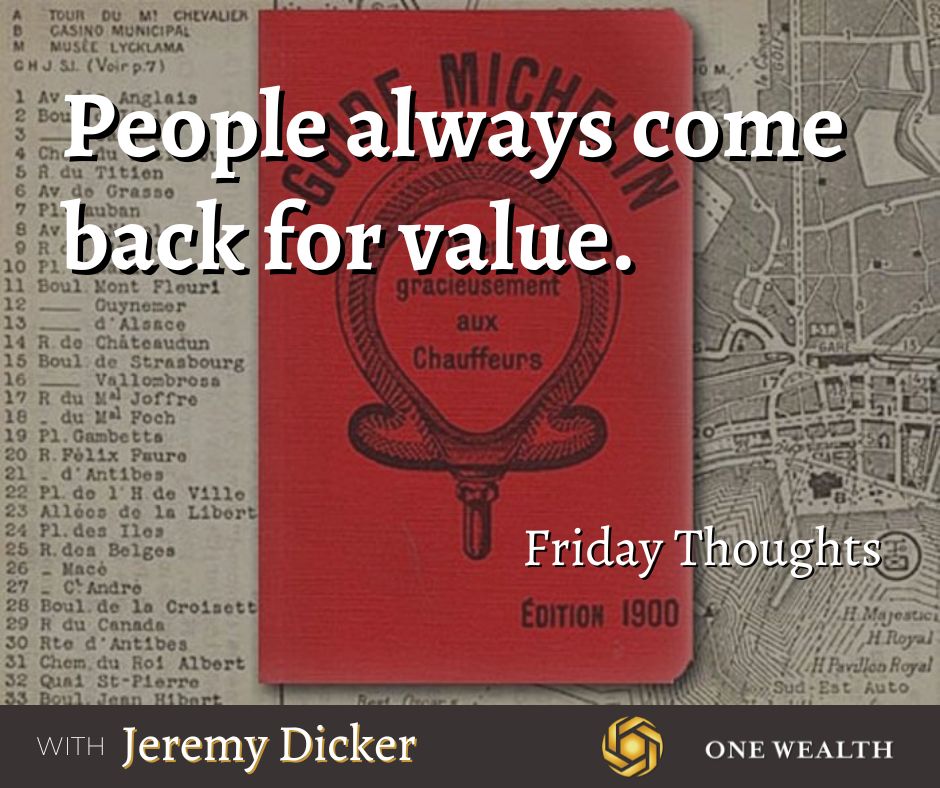
 In 1900, a small French company launched a brilliant marketing campaign that would change the face of an industry.
Back then, cars were rare and Michelin needed to sell more tires.
The problem…not enough people driving.
“So, what if we didn’t sell tires?” one man pondered. “What if we made people want to travel instead?”
“We will create a guidebook – not a book to sell tires, but a book to help drivers explore the open road. This book will have maps, gas station locations, mechanics, hotels and RESTAURANTS. We will sell nothing – just share what we know!”
Of course, more road trips = more worn-out tires = more tire sales.
By the 1920’s, the Michelin Guide was a hit and not because of the maps or the mechanics, but the restaurants people wanted to see and experience. People became obsessed with the restaurants section.
Michelin noticed.
So, in 1926, Michelin decided to add a rating system: one-star, two-stars and the elusive three-stars.
Chefs all over the world shook with fear and excitement!
The stars become everything. Get one and you were set. But lose one, and not so good.
Chefs redesigned menus in chase of that elusive star.
While the restaurant world obsessed over the ratings, Michelin pulled off the ultimate marketing move.
More stars equaled more marvel. More travel equaled more tires. More tires equaled more Michelin customers.
Here is what is amazing: in 125 years, Michelin has never once tried to sell a single tire in the guide. Never did they even advertise one.
Instead, they simply gave people value.
And value they received! Michelin didn’t just rate food – they rewrote the rules of marketing, solving for something much deeper.
They added real value and interest for people to follow, observe and obsess over.
It’s an incredible lesson that withstands the test of time: people always come back for value.
Not a product, but real value.
-J.D.